특집단편논문/SPECIAL SHORT PAPERS
비공진 스타 정션을 적용한 세라믹 모노블록 듀얼밴드 캐비티 필터
Ceramic Monoblock Dual-Band Cavity Filter Using Non-Resonant Star-Junction
Seung-Jun Park

, Yooree Shin
, Jeong-Hun Park
*, Moon-Que Lee
†
School of Electrical Engineering and Computer Science, University of Seoul
*Department of Electronics Engineering, Chungwoon University
© Copyright 2026 The Korean Institute of Electromagnetic Engineering and Science. This is an Open-Access article distributed under the terms of the
Creative Commons Attribution Non-Commercial License (http://creativecommons.org/licenses/by-nc/4.0/) which permits
unrestricted non-commercial use, distribution, and reproduction in any
medium, provided the original work is properly cited.
Received: Jan 07, 2026; Revised: Feb 04, 2026; Accepted: Mar 16, 2026
Published Online: May 31, 2026
요 약
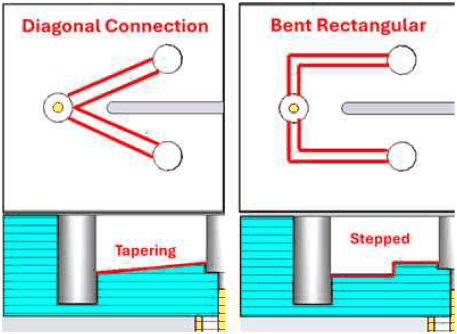
본 논문에서는 비공진 스타 정션(non-resonant star-junction) 구조를 이용한 세라믹 모노블록 듀얼 밴드 캐비티 필터의 설계 방법을 제안한다. 제안된 접합 구조(junction structure)는 금속 브릿지와 홀을 통한 프로브와 공진기간 유도성 결합(inductive coupling)을 통해 필터 요구 사양에 필요한 외부 품질 계수를 추출할 수 있게 한다. 또한 제안된 접합 구조는 금속 브릿지의 테이퍼링 구조, 계단식 구조 변형 등의 다양한 형태로의 변형이 가능하며, 동축 프로브뿐만 아니라 평면 전송 선로(planar transmission lines transitions)와의 전이 구조도 구현이 가능하여 높은 설계 유연성을 가진다. 제안된 접합 구조를 통해 구현된 듀얼 밴드 필터는 시뮬레이션 결과 1,710~1,785 MHz 및 1,920~1,980 MHz의 두 통과대역에서 19.5 dB 이상의 반사 손실과 1,805~1,880 MHz 대역에서의 −75 dB 이하의 우수한 격리도 특성을 달성하였다.
Abstract
This letter proposes a design method for a ceramic monoblock dual-band cavity filter using a non-resonant star-junction structure. The proposed junction structure facilitates the extraction of the required external quality factor (Qe) for filter specifications by establishing inductive coupling between the probe and the resonator through a metal bridge and hole configuration. This structure offers high design flexibility, as it can be implemented various shape of metal bridge such as tapered line or stepped structure and support both coaxial probe and planar transmission lines transitions. Simulation results shows the ceramic monoblock dual-band filter realized by the proposed junction structure greater than 20 dB of return loss in the passbands of 1,710~1,785 MHz and 1,920~1,980 MHz, as well as better than 75 dB of isolation (|S21|) in the 1,805~1,880 MHz.
Keywords: Coupling Matrix Synthesis; Waveguide Cavity Filter; Dual-Band Filter; Star-Junction; Non-Resonant Star-Junction
Ⅰ. 서 론
무선 통신 기술의 발전과 함께 멀티 밴드 시스템에 대한 수요가 급증함에 따라 RF(radio freqneucy) 프론트 엔드의 필수 구성 요소인 대역통과 필터, 특히 듀얼밴드 대역통과 필터, 다이플렉서 및 다중 대역 멀티플렉서에 대한 요구치는 점차 증가하고 있다[1]. 차수가 높은 채널 필터가 많이 결합된 다중 대역 멀티플렉서의 경우 포괄적이고 일반적인 합성 프로세스가 어려웠지만[2], 최근 들어 총 20개의 채널 필터가 결합된 200차수 이상의 스타 정션을 가진 멀티플렉서의 합성법에 대해 보고된 바 있다. 그러나, 여전히 물리적으로 4채널 이상의 멀티플렉서를 설계 하기 위한 스타 정션 구조는 난제로 남아있다[3].
본 논문에서는 비공진 스타 정션(non-resonant star-junction)을 물리적으로 구현하는 방법과 이를 적용한 세라믹 모노블록 듀얼 밴드 캐비티 필터의 설계 방법을 제안한다. 제안된 접합 구조는 금속 브릿지(metal-bridge)와 홀(hole)을 매개로 프로브와 공진기 간의 강한 유도성 결합(inductive coupling)을 형성하는 구조이다. 제안된 방식은 금속 브릿지의 높이와 홀의 위치 조절을 통해 필터 설계에 필요한 외부품질계수(Qe)를 추출할 수 있으며, 다양한 형태의 금속 브릿지 모양과 평면 전송 선로 전이 구조에 적용 가능하여 매우 높은 설계 유연성을 가진다.
Ⅱ. 듀얼 밴드 필터 설계
2-1 듀얼 밴드 필터의 결합 행렬 합성
필터의 삽입손실(insertion loss)을 최소화하고 소형화하기 위해선 설계 사양을 만족시키는 내에서 최소 차수를 가져야 한다. 따라서 듀얼 밴드 필터의 통과대역 내 반사손실 및 격리도(|S21|)를 만족시키기 위해 CH 1(channel 1) 필터는 1,805/1,813 MHz에 전송 영점(transmission zero)을 갖는 7차 필터로 설계하였다. CH 2(channel 2) 필터 또한 7차로 설계하였으며, 대칭 쌍(symmetric pair)인 2개의 전송 영점을 각각 1,867/2,226 MHz에 갖도록 설계하였다(표 1).
표 1. | Table 1.
듀얼 밴드 필터 설계사양 | Specification of the designed dual-band filter.
|
|
Dual-band filter |
|
Passband (MHz) |
CH 1 filter |
CH 2 filter |
|
1,710~1,785 |
1,920~1,980 |
|
Return loss (dB) |
>20 |
|
Isolation(, dB) |
>75 @ 1,805~1,880 MHz |
Download Excel Table
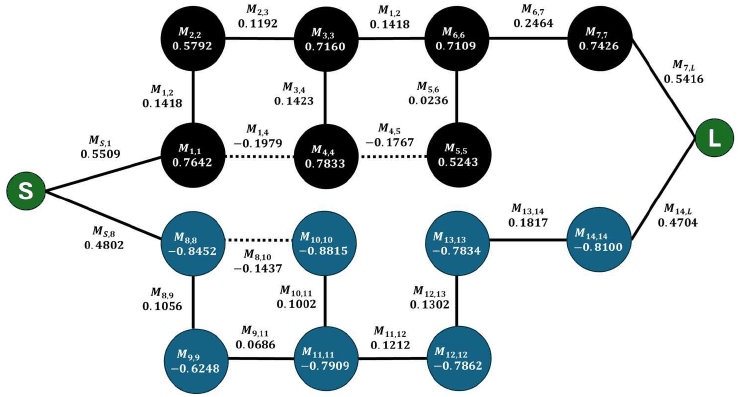
각 채널 필터의 결합행렬(coupling matrix)은 우선 각 채널 필터의 반사 영점(reflection zero)과 전송 영점을 가지는 체비셰프(Chebyshev) 특성 다항식을 기반으로 합성되었다. 이후, 물리적으로 구현이 가능하도록 유사변환(similarity transformation)을 거쳤으며, 이를 바탕으로 결합행렬의 산란계수(S-parameters)를 참고문헌 [4]의 식을 통해 계산하였다. 그림 1은 개별 채널 필터의 결합행렬을 통합 이후 최적화가 완료된 듀얼 밴드 필터의 커플링 토폴로지 다이어그램을 보여준다[5].
2-2 세라믹 모노블록 필터의 물리적 구현
2-2-1 단위 소자 물리적 설계 파라미터 추출
본 논문에서는 유전율(εr) 18 및 손실탄젠트(tanδ) 0.00023의 세라믹 소재를 적용한 CMDR(coaxial monoblock dielectric resonator)을 사용하였다. 은(Ag) 도금된 직육면체 캐비티 윗면 중심에 원통 딤플(dimple)을 수직으로 삽입하여 Quasi-TEM 공진 모드를 구현하였으며, 딤플의 높이를 조절하여 원하는 공진 주파수를 설계하였다[2]. 공진기 간 자기 결합은 인덕티브 아이리스(inductive iris)를 통해 구현되며, 전기 결합은 공진기 사이의 딤플을 통해 구현된다[6],[7].
2-2-2 외부품질계수 추출을 위한 비공진 스타정션 구조
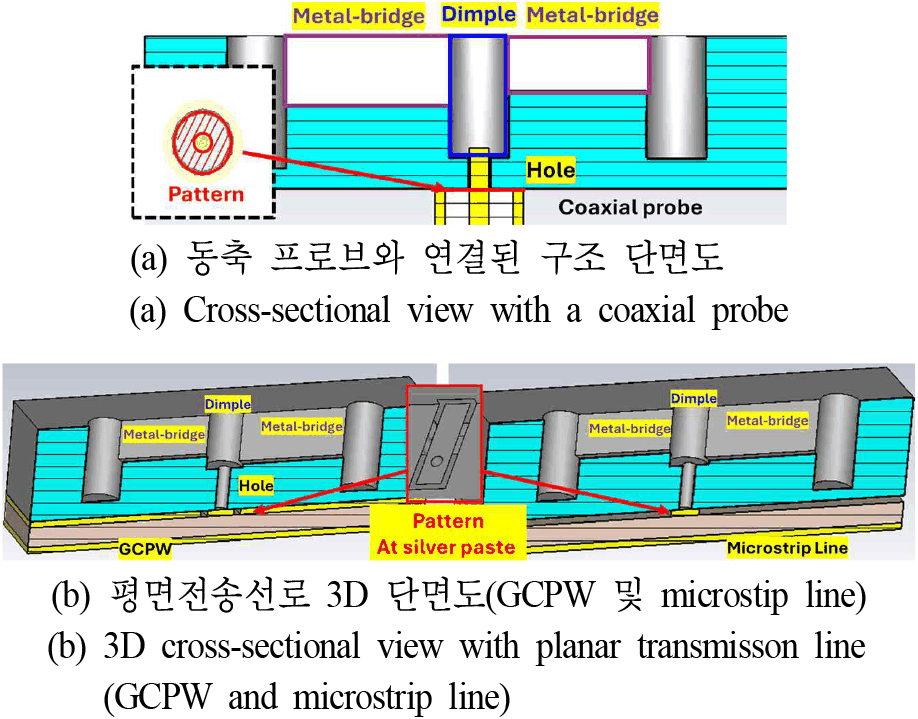
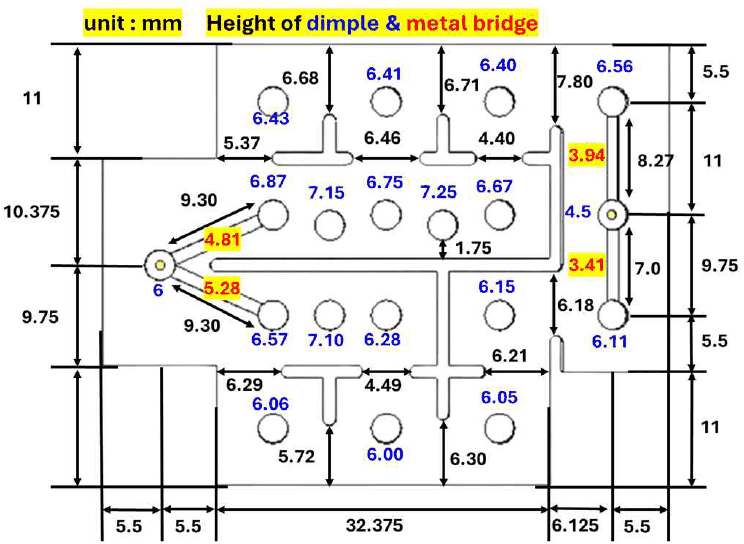
본 논문에서 제안한 비공진 스타정션의 기본 구조는 공통 접합 포트에 딤플과 각 채널 필터의 CMDR 딤플을 직육면체의 금속 브릿지를 통해 직접 연결하며, 원통 홀 과, 동축 프로브 및 평면 전송 선로를 위한 은 코팅 밑면의 패턴을 통해 구성된다(그림 2).
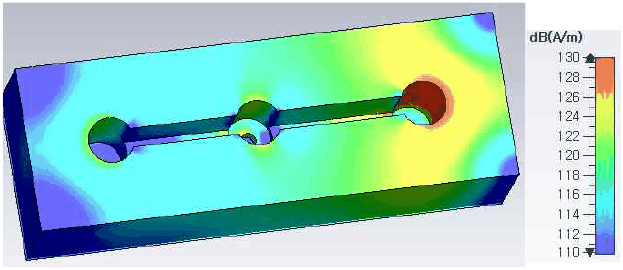
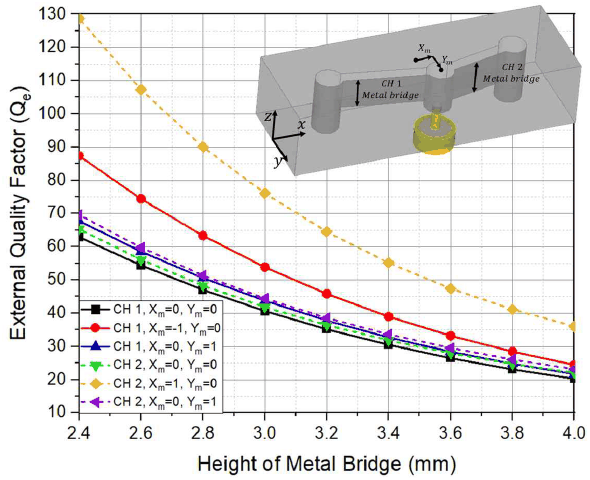
홀과 금속 브릿지를 통해 동축 프로브 및 평면 전송 선로의 마이크로스트립 라인 프로브가 CMDR과 강한 유도성 결합이 형성되며 이는 그림 3의 접합 구조 내의 자기장 분포도를 보면 확인 할 수 있다[8](그림 4).
그림 3. | Fig. 3.
제안된 접합 구조와 동축 프로브 결합 시 자기장 분포도 | H-field distribution when the proposed junction structure coupled with coaxial probe.
Download Original Figure
그림 4. | Fig. 4.
금속 브릿지 높이 및 홀 위치에 따른 Qe 변화 | Qe respect to metal bridge height and position of hole.
Download Original Figure
그림 5의 다양한 형태의 접합 구조와 Microstipline, CPW, GCPW 전이 구조 모두 두 모드의 외부 품질계수와 공진 주파수는 각각 약 23.1~23.7(1.74 GHz) 및 30.6~30.9 (1.95 GHz) 범위 내에서 안정적으로 최적화되었다(표 2).
표 2. | Table 2.
각 접합 구조의 외부 품질계수 및 공진주파수 | Qeand resonant frequencies of each structure.
|
Structure |
Q
e,1
|
f1(GHz) |
Q
e,2
|
f2(GHz) |
|
Tapering |
23.6 |
1.742 |
30.8 |
1.952 |
|
Stepped |
23.5 |
1.742 |
30.8 |
1.952 |
|
Diagonal connection |
23.2 |
1.742 |
30.7 |
1.953 |
|
Bend ractangular |
23.1 |
1.742 |
30.6 |
1.952 |
|
GCPW transition |
23.1 |
1.742 |
30.8 |
1.952 |
|
CPW transition |
23.2 |
1.742 |
30.7 |
1.952 |
|
Microstripline transition |
23.3 |
1.742 |
30.8 |
1.952 |
Download Excel Table
Ⅲ. 최적화 및 시뮬레이션 결과
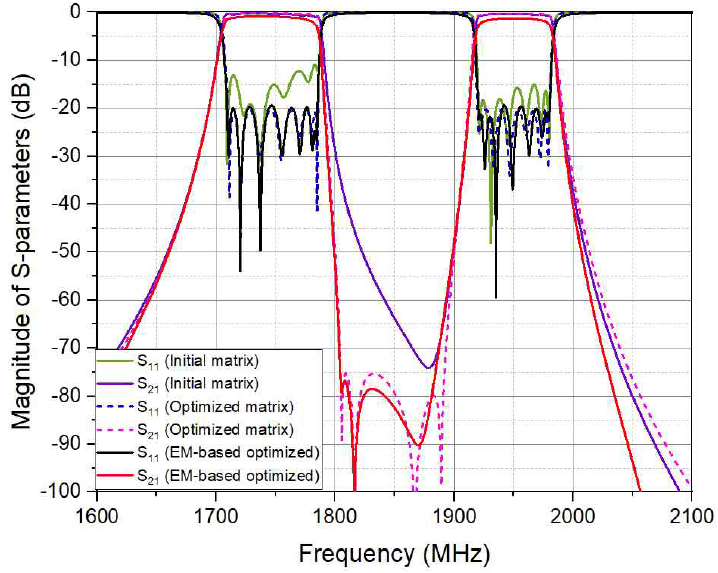
본 논문에서는 각 채널 필터를 선행 설계 및 최적화하고 이후, 제안된 접합 구조를 통해 통합하여 듀얼밴드 필터를 구현하였다. 참고문헌 [3] 듀얼 밴드 필터의 시뮬레이션 결과 두 통과대역 내의 반사손실은 19.5 dB 이상이며, 1,805~1,880 MHz 내 격리도는 75 dB 이상이고, 각 통과대역의 중심주파수의 삽입 손실은 각각 0.96 dB 및 1.36 dB이다(그림 6 및 그림 7, 표 3).
그림 7. | Fig. 7.
초기 및 최적화된 결합 행렬 및 EM 최적화 완료된 듀얼 밴드 필터의 산란계수 | S-parameters from Initial and optimized coupling matrices and EM-based optimized dual-band filter.
Download Original Figure
표 3. | Table 3.
듀얼/멀티 밴드 캐비티 필터 및 듀플렉서의 성능 비교 요약 | Perfomance summary of the published dual-band or multi-band cavity filters and duplexers.
|
Ref. |
Junction type |
Order |
Size (mm3) |
Isolation |
ϵr
|
I/O compatibility |
|
[2] |
Resonant junction |
32 |
110×50×8 |
>68 dB |
19.8 |
Stretchable coaxial probe |
|
[3] |
Resonant star-junction |
65 |
216×216×15 |
>75 dB |
1 (air) |
Typical coaixal probe |
|
[7] |
Non-resnonant star-junction |
8 |
57.44×21.88×4.1 |
>66 dB |
20 |
Typical coaxial probe |
|
This work |
Non-resonant star-junction |
14 |
55×42.13×7.5 |
>75 dB |
18 |
Typical coaxial probe, GCPW, CPW, microstrip line |
Download Excel Table
Ⅳ. 결 론
본 논문에서는 비공진 스타정션 구조를 제안하여 세라믹 모노블록 듀얼 밴드 캐비티 필터를 설계하였다. 제안된 접합 구조는 금속 브릿지와 홀을 통한 유도성 결합으로 외부품질계수를 추출할 수 있으며, 다양한 형태로 설계가 가능하여 높은 설계 유연성을 가진다.
Acknowledgements
이 논문은 2025년도 교육부 및 서울특별시의 재원으로 서울RISE센터의 지원을 받아 수행된 지역혁신 중심 대학지원체계(RISE)의 결과임(2025-RISE-01-017-04).
References
K. Zhou, K. Wu, "Substrate integrated waveguide multiband bandpass filters and multiplexers: Current status and future outlook,"
IEEE Journal of Microwaves, vol. 3, no. 1, pp. 466-483, Jan. 2023.


R. Hou, T. Su, J. Chen, and K. D. Xu, "Synthesis and design of a dual-band diplexer based on coaxial monoblock dielectric resonators for 5G base stations,"
IEEE Transactions on Microwave Theory and Techniques, vol. 72, no. 6, pp. 3600-3613, Jun. 2024.
B. Liu, G. Macchiarella, Y. Yang, Y. Zhang, and M. Yu, "Comprehensive analytical synthesis of star-junction multiplexers with guaranteed equi-ripple responses,"
IEEE Transactions on Microwave Theory and Techniques, vol. 73, no. 6, pp. 3285-3297, Jun. 2025.
R. J. Cameron, C. M. Kudsia, and R. R. Mansour,
Microwave Filters for Communication Systems: Fundamentals, Design and Applications, 2nd ed. Hoboken, NJ, John Wiley & Sons, 2018.
M. Gong, F. Zhao, S. Zeng, and C. Li, "An experimental study on local and global optima of linear antenna array synthesis by using the sequential least squares programming,"
Applied Soft Computing, vol. 148, Nov. 2023.
C. J. Kwon, M. Q. Lee, "Ceramic monolithic waveguide duplexer with compact size,"
The Journal of Korean Institute of Electromagnetic Engineering and Science, vol. 31, no. 11, pp. 897-904, Nov. 2020.
J. S. Hong, M. J. Lancaster,
Microstrip Filters for RF/Microwave Applications. New York, NY, John Wiley & Sons, 2001.
J. H. Park, S. J. Park, "Monolithic ceramic waveguide filter using a transition between GCPW feed and ceramic waveguide for 28 GHz,"
Microwave and Optical Technology Letters, vol. 66, no. 10, p. e34332, Oct. 2024.